LEARNING & paideia in the field
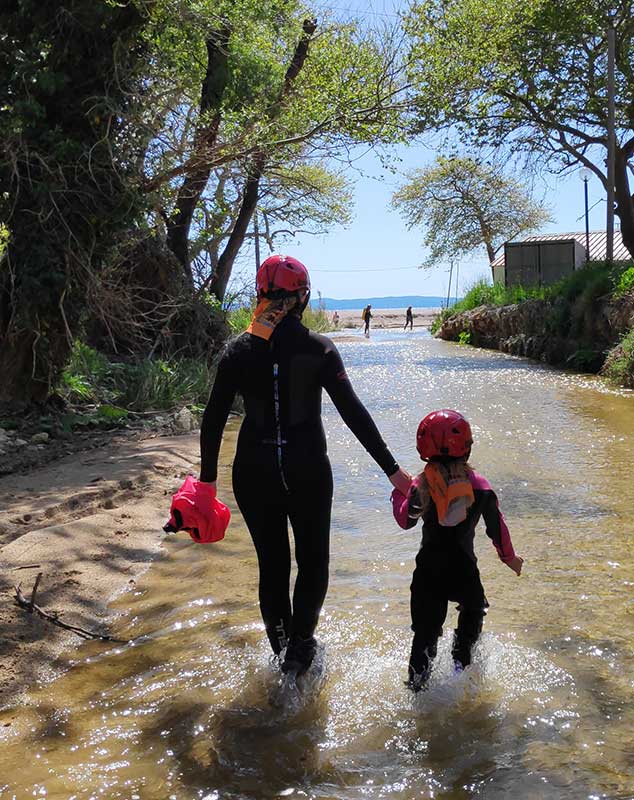
Learning Beyond the Classroom
The learning experience within Life Restart does not unfold in classrooms, in front
of boards, or through presentations. It takes place in the field — where
environment, conditions, and human choices cannot be ignored. Nature does not
function as a supplementary tool, but as the primary framework for
understanding the relationship between people, place, and responsibility.
From Knowledge to Awareness
One without the other remains incomplete.
Children and Young People in the Field
Children and young people do not truly learn when they are merely told what is right. They learn when they see, touch, and experience. Within Life Restart, their participation is grounded in lived understanding rather than admonition. Nature becomes a field of experience where limits and consequences are understood without coercion.
Research as a Natural Extension
Experiential learning within Life Restart creates fertile ground for
observation, documentation, and scientific study. Life Restart seeks
collaboration with academic institutions to document and evaluate its
outcomes.
Research does not function separately from experience, but
as its natural extension — contributing to a deeper understanding of
human behavior, relationships, and reconnection with the environment.
The Role of the Family
Learning in the field gains greater value when it is not limited to the individual. Shared family participation creates shared experience and shared language. Parents are not observers; they are fellow participants. In doing so, they reinforce continuity, understanding, and collective experience.
Institutional Clarification
Life Restart is not an educational institution and does not replace formal education. It operates complementarily, as a field of experiential learning and formative development, in cooperation — not competition — with existing institutions.
School Communities and Complementary Character
The field offers students and educators a different experiential space, where concepts such as cooperation, responsibility, relationship with the environment, and collectivity acquire tangible meaning.
AREAS OF IMPLEMENTATION & LOCAL COMMUNITIES
Place as a Living System
Life Restart is not implemented in “locations,” but in places with life, memory, and human presence. Each area is approached as a living system, where natural environment, community, and daily life coexist. The selection of a place is not based on image or touristic visibility, but on the potential for meaningful interaction between people and place.
Areas Outside Mass Tourism
Life Restart operates intentionally outside centers of mass tourism. This is not a rejection of visitation, but a commitment to measure. Volume alters a place, accelerates its rhythm, and diminishes the depth of lived experience. Life Restart seeks areas where the place can still be “heard.”
Local communities are not treated as service providers, but as co-creators of the experience. The presence of Life Restart does not aim to impose itself, but to integrate respectfully. Dialogue with local residents, understanding their needs and boundaries, and honoring their daily rhythm are fundamental conditions for implementation.
The Place Does Not Adapt to the Program
Life Restart
does not transfer a fixed model nor require a place to adapt to it. On
the contrary, the framework adapts to the place. Each implementation is
unique, because each place carries its own dynamics, history, and social
composition.
Reciprocity and Continuity
Implementation in any
region seeks reciprocity. The experience does not end with hosting
visitors; it aims to leave a positive imprint on the place — through
knowledge, relationships, and reinforcement of local identity.
Continuity
holds greater value than frequency. This approach forms the basis for
the model’s gradual development across different European regions, where
each place retains its uniqueness while sharing common principles of
operation.
ACTIONS AS INSTRUMENTS
OF A FORMATIVE PROCESS
Action with Meaning - Not Activities.
Within Life Restart, actions are not designed to fill time or create intensity. They are not recreational activities, but instruments of a formative process. Each action is selected and structured according to what it cultivates: attitude, responsibility, cooperation, and awareness.
Experience passes first through the body, and only then through thought. Movement, fatigue, balance, and contact with natural elements activate forms of understanding that cannot be transmitted through words alone. The body remembers where theory is forgotten.
The River, the Trail, the Act of Staying
Descending a river, walking a trail, moving through a forest, or staying in a place are not simple experiences. They are frameworks within which individuals encounter rhythm, limits, and consequences. Water requires cooperation and trust. The trail requires patience and measure. Shared accommodation requires adaptation and respect.
Silence as Active Practice
Silence is not the absence of action. It is an active condition for learning. It creates space for observation, inner dialogue, and meaningful communication. Within Life Restart, silence is consciously integrated into the process — not as a pause, but as a tool for understanding.
The Group Through Action
Actions reveal the dynamics of the group. Roles emerge, responsibilities are shared, and vulnerabilities become visible without exposure. Shared effort cultivates trust and a sense of “togetherness” — not through words, but through lived experience.
The Formative Value of Simplicity
The most meaningful actions are often the simplest: sharing a meal, walking a path, working together in a hosting space. Simplicity removes noise and allows individuals to observe themselves and others without external filters.
Guidance Without Imposition
Actions within Life Restart are neither mechanical nor imposed. There is guidance, structure, and safety — but not pressure. The role of guidance is to create conditions and then step back when the experience can speak for itself.
SHARED PAIDEIA IN THE FIELD
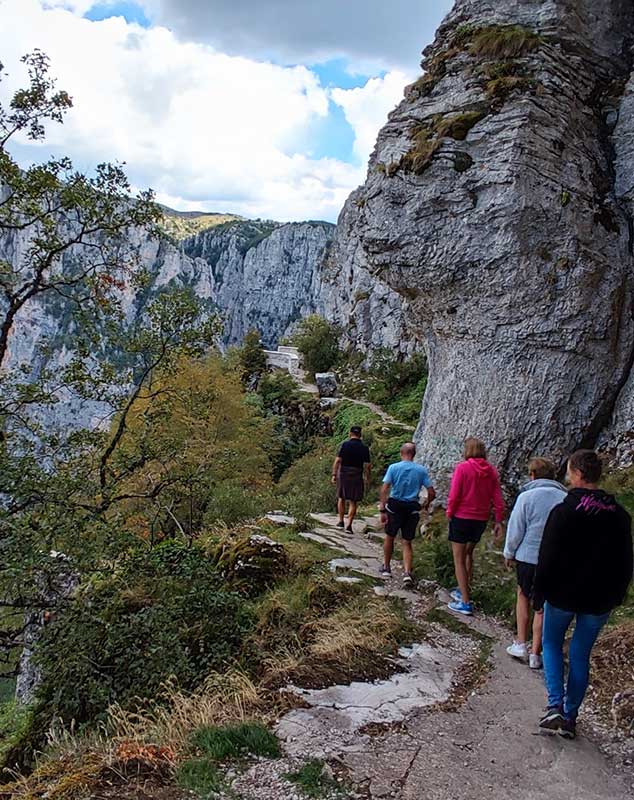
Paideia as a Way of Being
Paideia within Life Restart is not delivered in classrooms nor organized as a formal instructional process. It emerges through participation in the field — through silence, cooperation, shared effort, and contact with the natural environment.
Understanding the philosophy is only part of the picture. See how Life Restart takes shape in the field, from place selection to pilot programs.